Drain Field Repair in Cleveland, GA
Soggy yard, standing water, or odors over the field? We diagnose a struggling drain field and fix what we can.
Drain Field in Cleveland
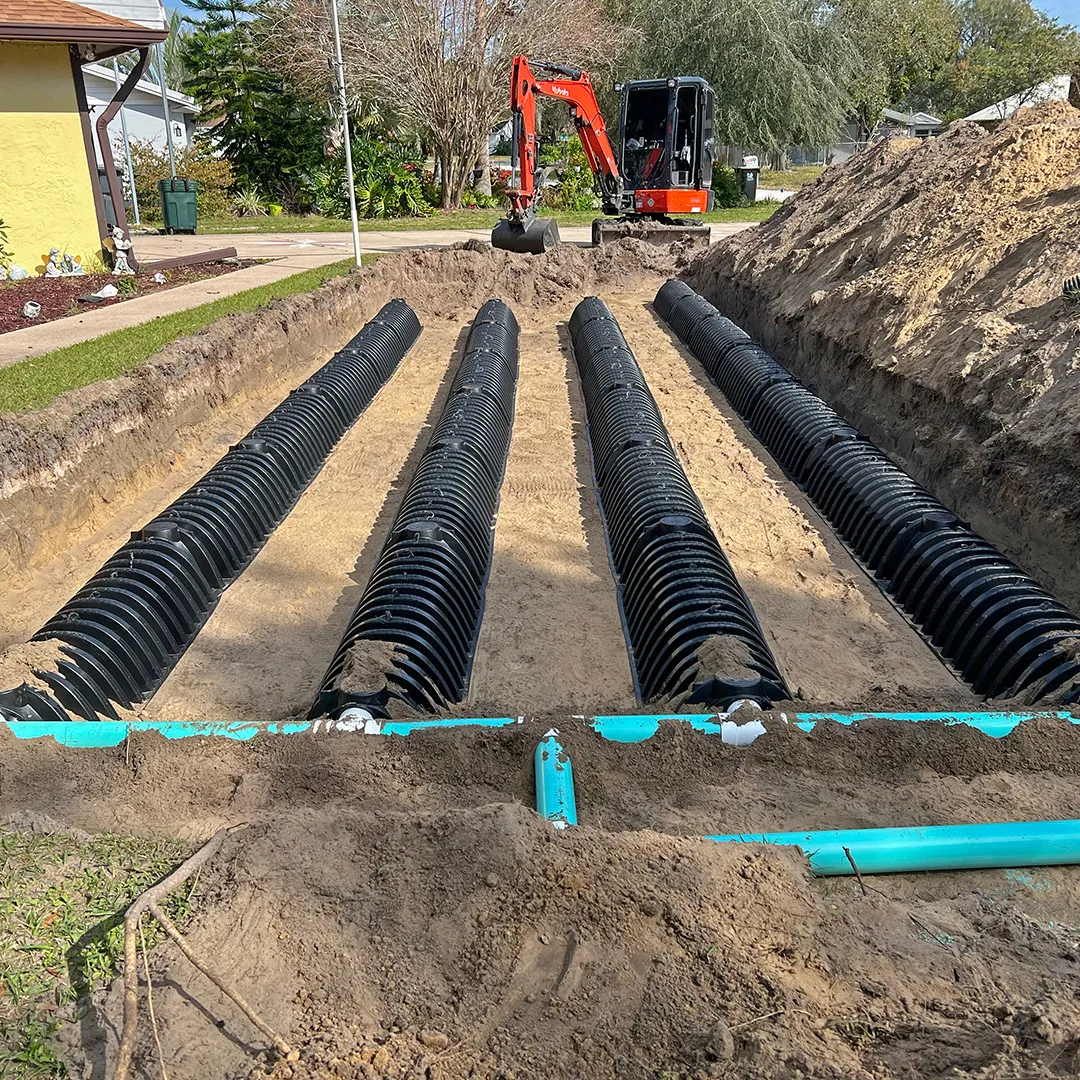
The drain field — also called the leach field — is where treated water from the tank soaks back into the ground, and it is both the most important and the most expensive part of a septic system. When a field starts to fail you see it in the yard: spongy or standing water over the lines, lush green grass in strips, sewage odor outside, slow drains in the house, and eventually backups. We diagnose and repair drain field problems across North Georgia. A lot of field trouble is not a dead field at all — it is a tank that overflowed solids into the lines, a failed pump, a crushed or root-clogged line, or simply ground saturated from our heavy mountain rains. We find the real cause, and where the field itself is the problem we repair, restore, or rebuild the failed lines rather than assuming the whole thing has to be torn out.
Septic service in Cleveland
Cleveland is the seat of White County, sitting in the foothills just south of Helen where the mountains begin, best known as the home of Babyland General Hospital — the birthplace of the Cabbage Patch Kids — with Yonah Mountain rising over the county and the Chattahoochee headwaters and Duke’s Creek running through the surrounding hills. It is a more year-round, working community than the tourist crush up in Helen, a mix of the town, farm and family land, and a growing number of mountain homes. Outside the small town center, nearly everything runs on septic. We pump, clean, repair, and inspect residential systems throughout the Cleveland and White County area. The mix here is foothill and mountain at once: long-held farm land around Mossy Creek and Town Creek with older, undersized tanks and no records, newer builds on lots subdivided from larger tracts, and cabins and second homes up toward Sautee Nacoochee and the grades under Yonah. We see overdue tanks on homes that changed hands, drain fields working in the area’s clay and rocky soil after the heavy rain this country gets, and a steady demand for inspections as properties sell. We know White County and how its lots handle a system. Tell us where your tank is and what it is doing, and we will give you a straight answer and a real price.
- Diagnosis of standing water, odors, and soggy ground
- We rule out tank, pump, and line problems before condemning a field
- Crushed, clogged, and root-invaded lines repaired or replaced
- Distribution box checked and rebuilt for even flow
- Honest call on repair vs. rebuild — no needless tear-outs
- Guidance on protecting the field from saturation and overload
Need drain field elsewhere? See all of our Cleveland services or drain field across North Georgia.
Drain Field in Cleveland
Tell us what’s happening and we’ll call you back — local Cleveland service.
Areas We Cover in Cleveland
In town or up a mountain road — if it’s in or around Cleveland, we come to your property.
- Sautee Nacoochee
- Mossy Creek
- Tesnatee
- Town Creek
- Blue Creek
- Yonah
Common Septic Issues in Cleveland
The septic problems we see most around here — and how we handle them.
Older farm systems on long-held land
Much of White County around Mossy Creek and Town Creek is long-held farm and family land with septic tanks decades old and often undersized for today’s households. Regular pumping and a look at the tank and baffles keep these older systems from washing solids into the drain field.
New builds on subdivided lots
Cleveland’s growth means a lot of newer homes on lots carved from larger tracts, where the drain field had to fit the soil and grade available. Knowing where the tank and field are, and pumping on schedule, protects a field that may be working in slow clay or rocky ground.
Properties that changed hands without records
Homes around here often sell with no idea when the tank was last serviced, and the resale market stays busy with buyers wanting mountain land near Helen and Yonah. A pump and inspection after a purchase gives you a baseline and catches a worn baffle or struggling field before it becomes an emergency.
Drain Field in Cleveland — FAQs
Do you cover Cleveland and White County?
I just bought an older home near Cleveland — what should I do first?
How often should a rural White County system be pumped?
There is standing water and a smell in my yard — is my drain field dead?
Can a failing drain field be saved, or does it have to be replaced?
How do I keep my drain field from failing?
Also Serving Near Cleveland
Need Drain Field in Cleveland?
Call now for a fast quote — we come to your property, and backups and emergencies get priority.